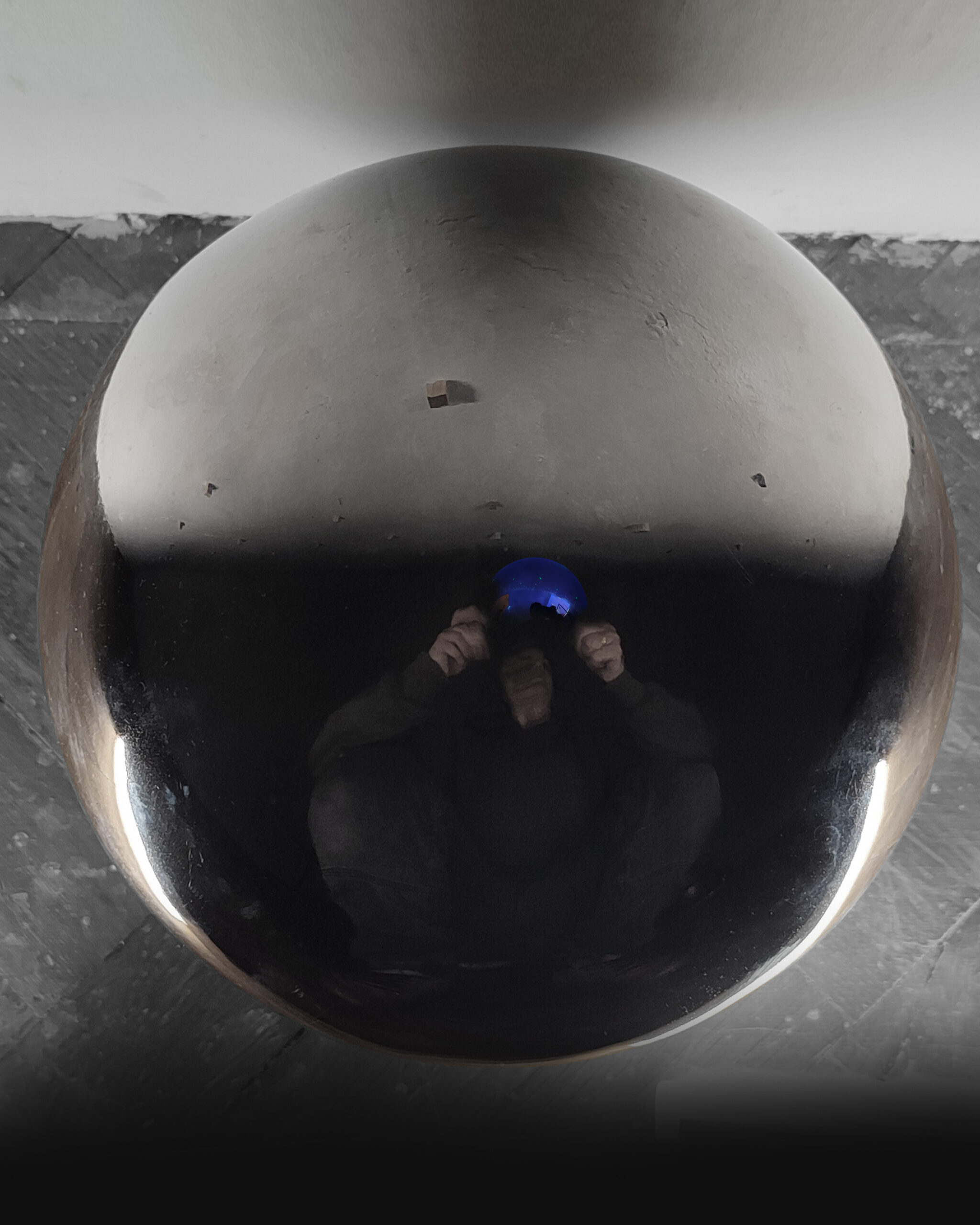
At the very center of our field of reception there exists something that bends probability itself, while simultaneously openng a gateway to infinity and to oblivion. // 'w środku’ naszego pola odbioru istnieje coś, co zakrzywia prawdopodobieństwo i jednocześnie jest bramą do nieskończoności i zapomnienia.
Tabula Rasa i Pole Odbioru
Pole odbioru dojrzewa we mnie od dawna, cały czas uczę się go doświadczać i w ogóle je dostrzegać. Podtytuł wystawy, mówiący o nasłuchiwaniu, dotyczy próby słyszenia tego, co we mnie – w nas, ludziach – wybrzmiewa. Pole odbioru – to MY. Cała nasza istota, powierzchnia odczuwania i myślenia. A ’w środku’ naszego pola odbioru istnieje coś, co zakrzywia prawdopodobieństwo i jednocześnie jest bramą do nieskończoności i zapomnienia. Ten punkt to również portal do 'wnętrza’ naszego odczuwania, samej istoty człowieczeństwa. Można próbować patrzeć i nie oślepnąć. Zazwyczaj, jak wejdziemy tam na ułamek sekundy jest dobrze. Zazwyczaj zapominamy o wszystkim w kolejnej. Ale to właśnie tam mieszczą się najważniejsze Wrażenia o egzystencji, prawdziwe okno na rzeczywistość.
Tabula Rasa – to nawiązanie do pojęcia pustej kartki jako świeżego, niezapisanego umysłu. Jest ona ujęciem paradoksu 'pustki’, prezentując złożoność i chaotyczność Fałdy skonfrontowanej z pustką białego niezapisanego papieru. To moje pole odbioru. Nieskończone. Puste. Fluktuujące.
W pewnym sensie kształtuję swoje pole odbioru kiedy kalibruję na nie moją twórczość. Przypomina to łapanie ostrości – z każdym krokiem jestem bliżej, widzę więcej, jednak kierunek w którym stawiam kolejne kroki jest kompletnie nieokreślony. Nie widzę żadnej drogi, muszę ją wywęchiwać z ulatniających się sensów chwil. Ślepy pochód – bo uczę się pokładać zaufanie w innym zmyśle niż logika.
The field of reception has been maturing within me for a long time; I am continuously learning to experience it and, in fact, to recognize its presence at all. The subtitle of the exhibition, invoking the act of listening, concerns an attempt to hear what resonates within me — within us, as human beings. The field of reception is ourselves: the totality of our being, the delicate surface upon which feeling and thought take shape.
And at the very center of this field there exists something that bends probability itself, while simultaneously opening a gateway to infinity and to oblivion. This point – flickering, almost impossible to seize — is also a portal into the interior of our sensing, the very core of human existence. One may attempt to look toward it and not go blind. Usually, when we enter that space for even a fraction of a second, everything feels lucid. And yet, in the next moment, we forget. Still, it is precisely there that the most essential impressions of existence reside – the truest window onto reality.
Tabula Rasa – evoking the notion of the blank page as a fresh, unwritten mind – becomes here an expression of the paradox of ’emptiness’: the complexity and chaotic entanglement of the Fold confronted with the white, unmarked paper. This is my field of reception: infinite, empty, fluctuating.
In a certain sense, I shape my field of reception each time I calibrate my practice toward it. It resembles the act of bringing something into focus — with each step I draw nearer, I see more, and yet the direction in which I move remains utterly undefined. No path is given; I must scent it out from the evaporating meanings of fleeting moments. It is a blind procession – one in which I learn to place my trust in a sense other than logic.
The Field of Reception – Listening // Pole Odbioru – Nasłuchiwanie
The word “Listening-In” comes back to me. For me, it is a reminder to stay attuned to myself and to the world. We are a FIELD OF RECEPTION, and life is a process of tuning ourselves to the deep pulse of existence. // Powraca do mnie słowo „Nasłuch”. To dla mnie przypomnienie o tym, żeby zachować wyczulenie na siebie i świat. Jesteśmy POLEM ODBIORU, a życie procesem dostrajania do głębokiego pulsu istnienia.
O wystawie – komentarz autorski
Wystawa Pole Odbioru była dla mnie szczególna, bo w przedziwny sposób wpisywała się w znaczenie PROCESU dawkowała mi wiedzę o mnie samej, pod koniec obdarzając niewyobrażalnym przezentem.
Pole odbioru dojrzewa we mnie od dawna, cały czas uczę się go doświadczać i w ogóle je dostrzegać. Podtytuł wystawy, mówiący o nasłuchiwaniu, dotyczy próby słyszenia tego, co we mnie – w nas, ludziach – wybrzmiewa. Pole odbioru – to MY. Cała nasza istota, powierzchnia odczuwania i myślenia. A ’w środku’ naszego pola odbioru istnieje coś, co zakrzywia prawdopodobieństwo i jednocześnie jest bramą do nieskończoności i zapomnienia. Ten punkt to również portal do 'wnętrza’ naszego odczuwania, samej istoty człowieczeństwa. Można próbować patrzeć i nie oślepnąć. Zazwyczaj, jak wejdziemy tam na ułamek sekundy jest dobrze. Zazwyczaj zapominamy o wszystkim w kolejnej. Ale to właśnie tam mieszczą się najważniejsze Wrażenia o egzystencji, prawdziwe okno na rzeczywistość.
Może warto nadstawić ucho i posłuchać w ciszy tego co tam się formuje.
Moją wystawą chcę dać przestrzeń, „pole odbioru” odczuwania, stworzyć okoliczności, które wyciszą wewnętrzny konflikt i wprowadzają w stan receptywności, przyjmowania. Interesuje mnie uwrażliwienie percepcji, poszerzenie jej pola poza samego siebie, na całą rzeczywistość.
Tworzenie jest dla mnie procesem dostrajania, takim 'gestem uważności wobec tego, co pulsuje w głębi naszego istnienia, głębokiego pulsu świata. Jest to też słuchanie świata na nowo, świata i siebie samego. Dopatruję się w powstałych formach – rzeczywistych obiektów, siebie, doznań, emocji – czegoś uniwersalnego, jak zapisu nieprzypadkowego algorytmu mającego w swojej konstrukcji wszystkie możliwe kombinacje oraz tą jedyną, indywidualną, którą dostrzegamy.
To tak, jakby moment wyklarowania się tworu oznaczał dla wszechświata konieczność takiej, a nie innej manifestacji.
Pole odbioru to miejsce dostrojenia, w którym zewnętrzne formy spotykają się z wewnętrznym rezonansem.
The exhibition Field of Reception was a singular experience for me, for it inscribed itself into the very meaning of PROCESS in a strangely organic way – dispensing knowledge about myself in carefully measured doses, and ultimately bestowing a gift of unimaginable magnitude.
The field of reception has been maturing within me for a long time; I am continuously learning to experience it and, in fact, to recognize its presence at all. The subtitle of the exhibition, invoking the act of listening, concerns an attempt to hear what resonates within me — within us, as human beings. The field of reception is ourselves: the totality of our being, the delicate surface upon which feeling and thought take shape.
And at the very center of this field there exists something that bends probability itself, while simultaneously opening a gateway to infinity and to oblivion. This point – flickering, almost impossible to seize — is also a portal into the interior of our sensing, the very core of human existence. One may attempt to look toward it and not go blind. Usually, when we enter that space for even a fraction of a second, everything feels lucid. And yet, in the next moment, we forget. Still, it is precisely there that the most essential impressions of existence reside – the truest window onto reality.
Perhaps, then, it is worth leaning in and listening, in silence, to what is taking shape there.
With this exhibition, I aim to open a space – a “field of reception” – for sensing; to create conditions that quiet inner conflict and invite a state of receptivity and openness. I am interested in sharpening perception, expanding its field beyond the self and toward the entirety of lived reality.
For me, creation is a process of tuning—a gesture of attentiveness toward what vibrates in the depths of our existence, toward the deep pulse of the world. It is also an act of listening to the world anew—to the world and to oneself.
In the forms that emerge—the tangible objects, the sensations, the emotional residues—I perceive something universal, akin to the imprint of a non-random algorithm that contains within its structure all possible combinations, as well as the single, singular one that we happen to recognize.
It is as if the moment a form crystallizes signals the universe’s necessity for this, and not another, manifestation.
The field of reception becomes a site of attunement, where external forms encounter an inner resonance.
The „I” question
Robert Zbikowski o wystawie Pole Odbioru
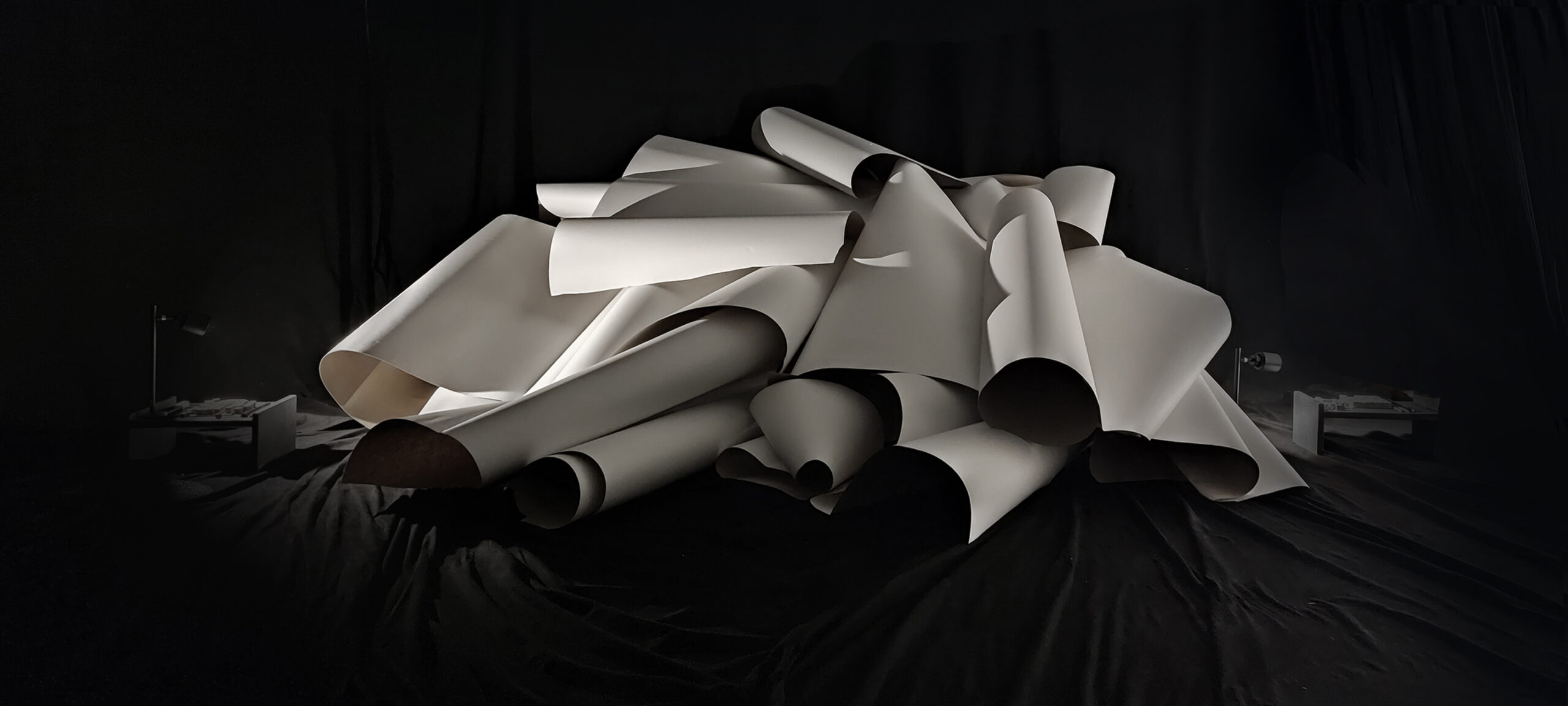
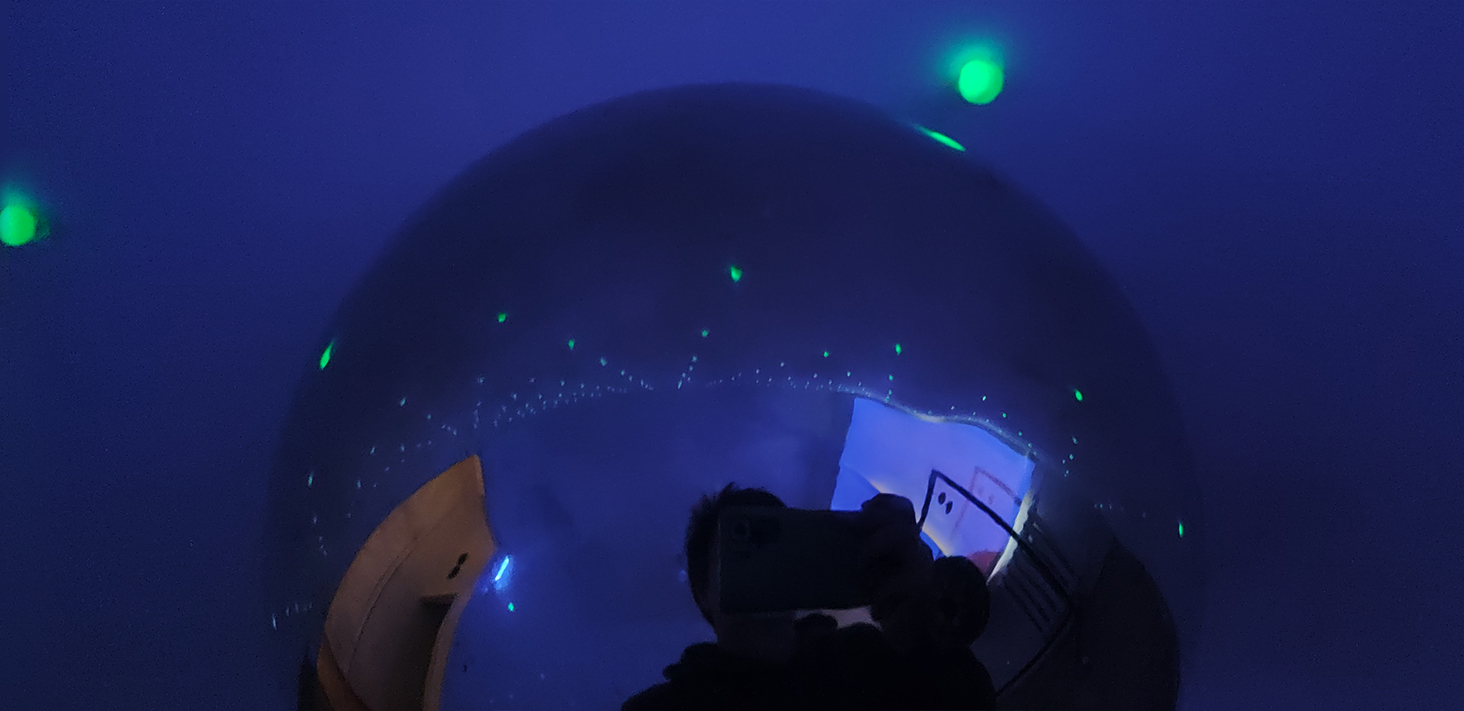
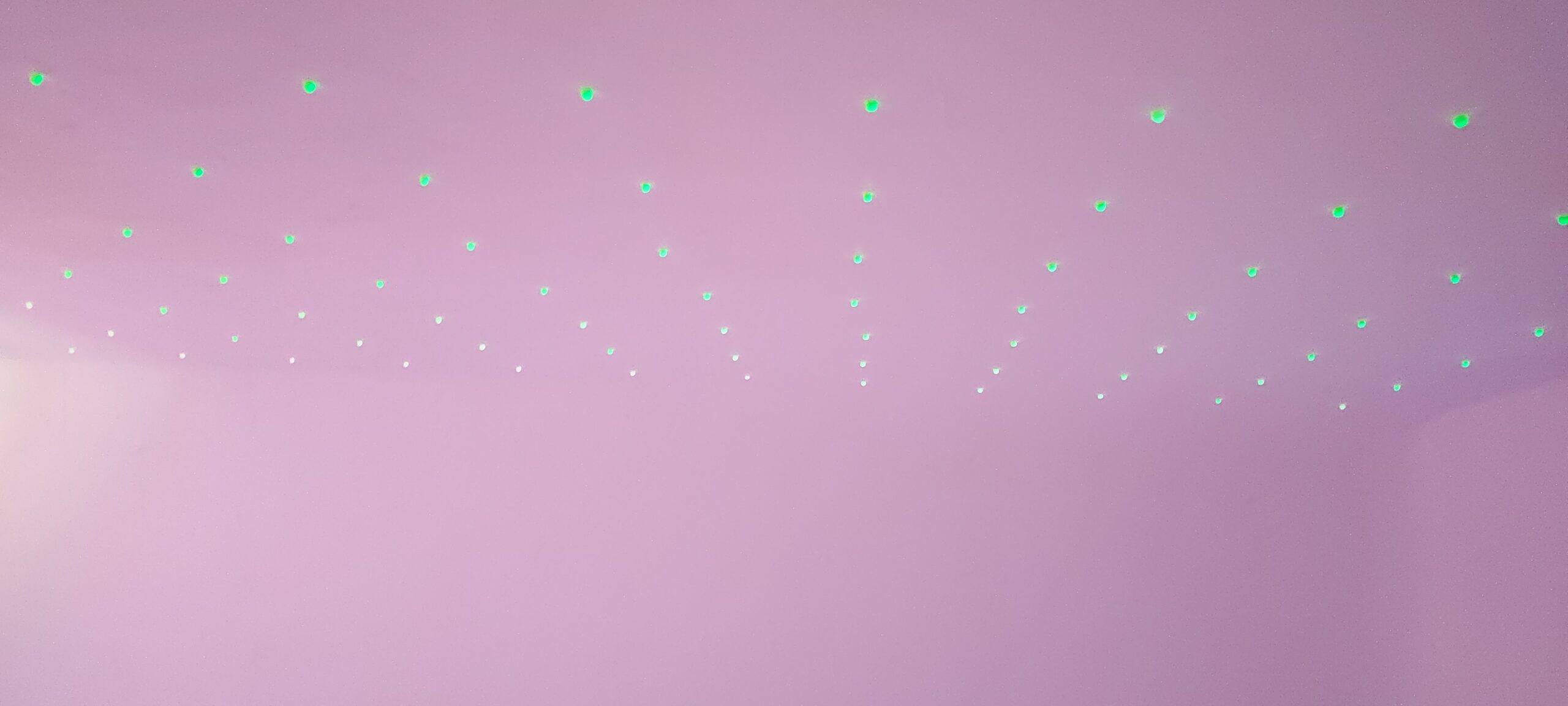
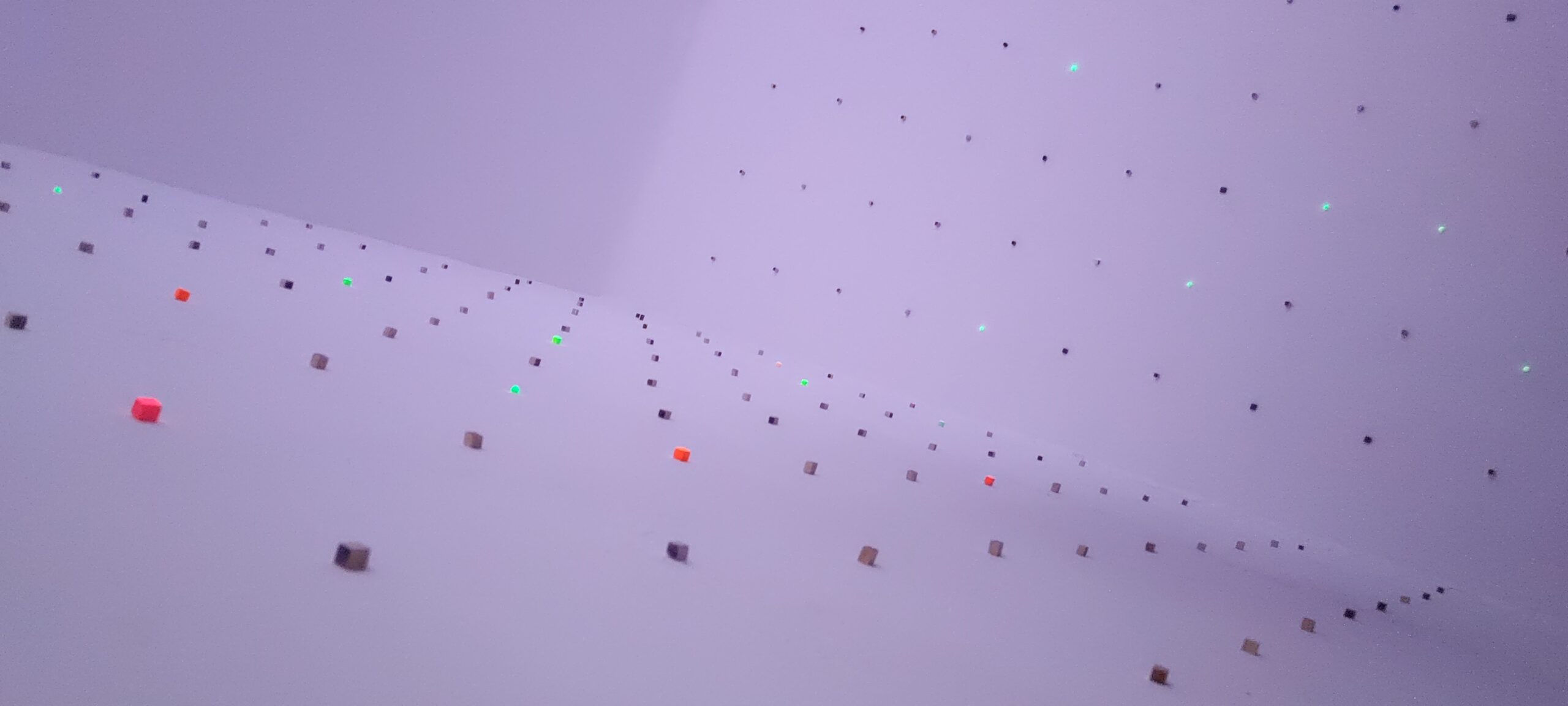
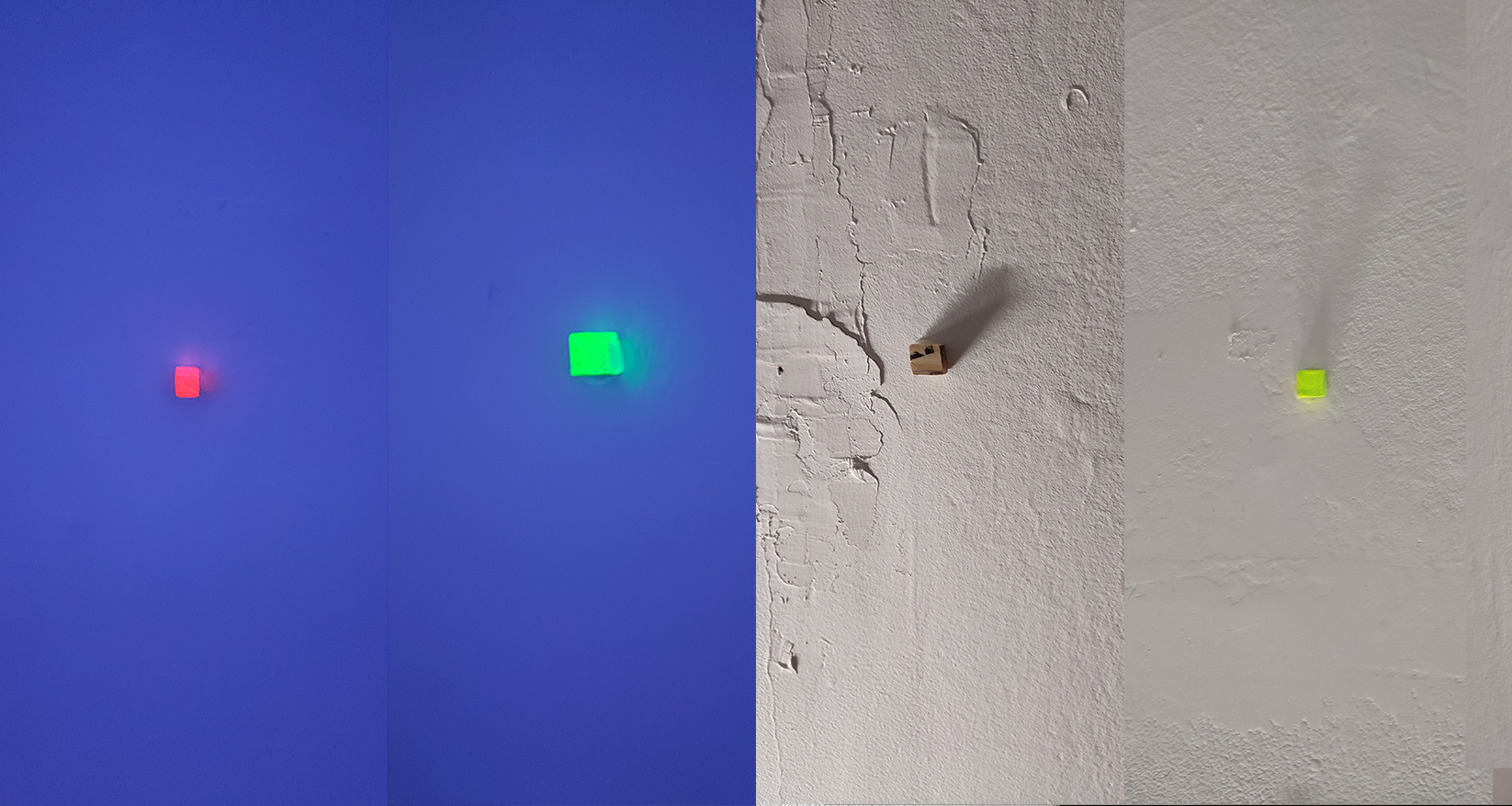
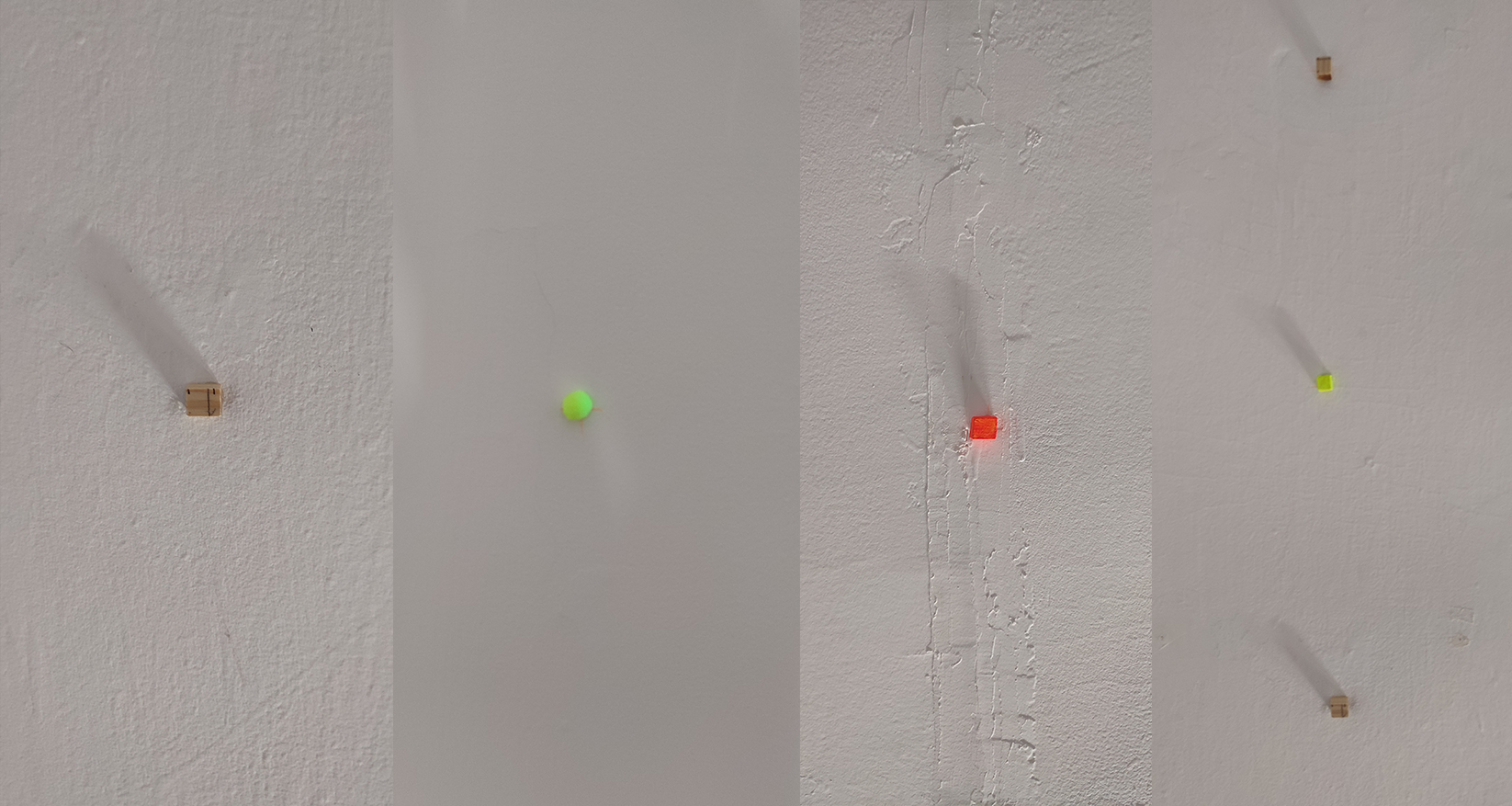
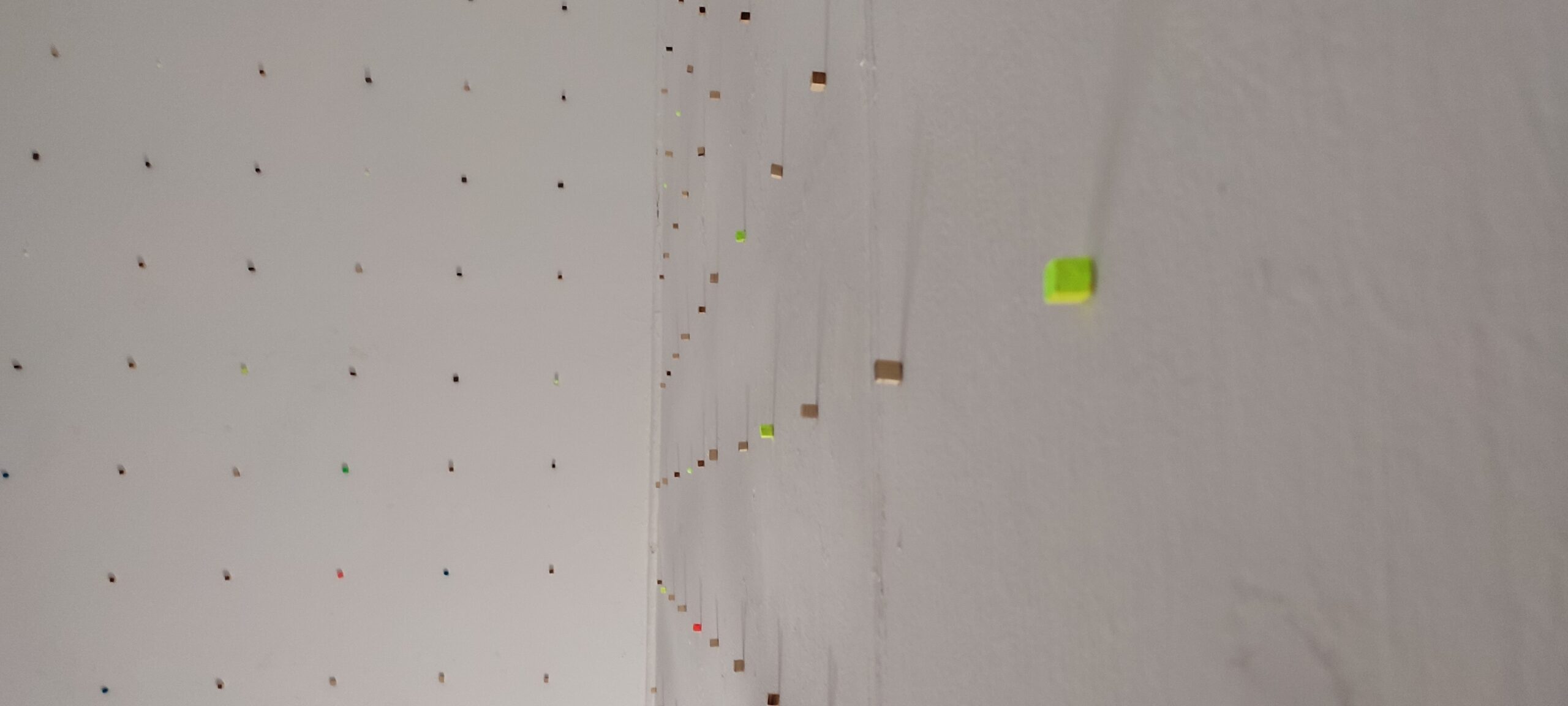
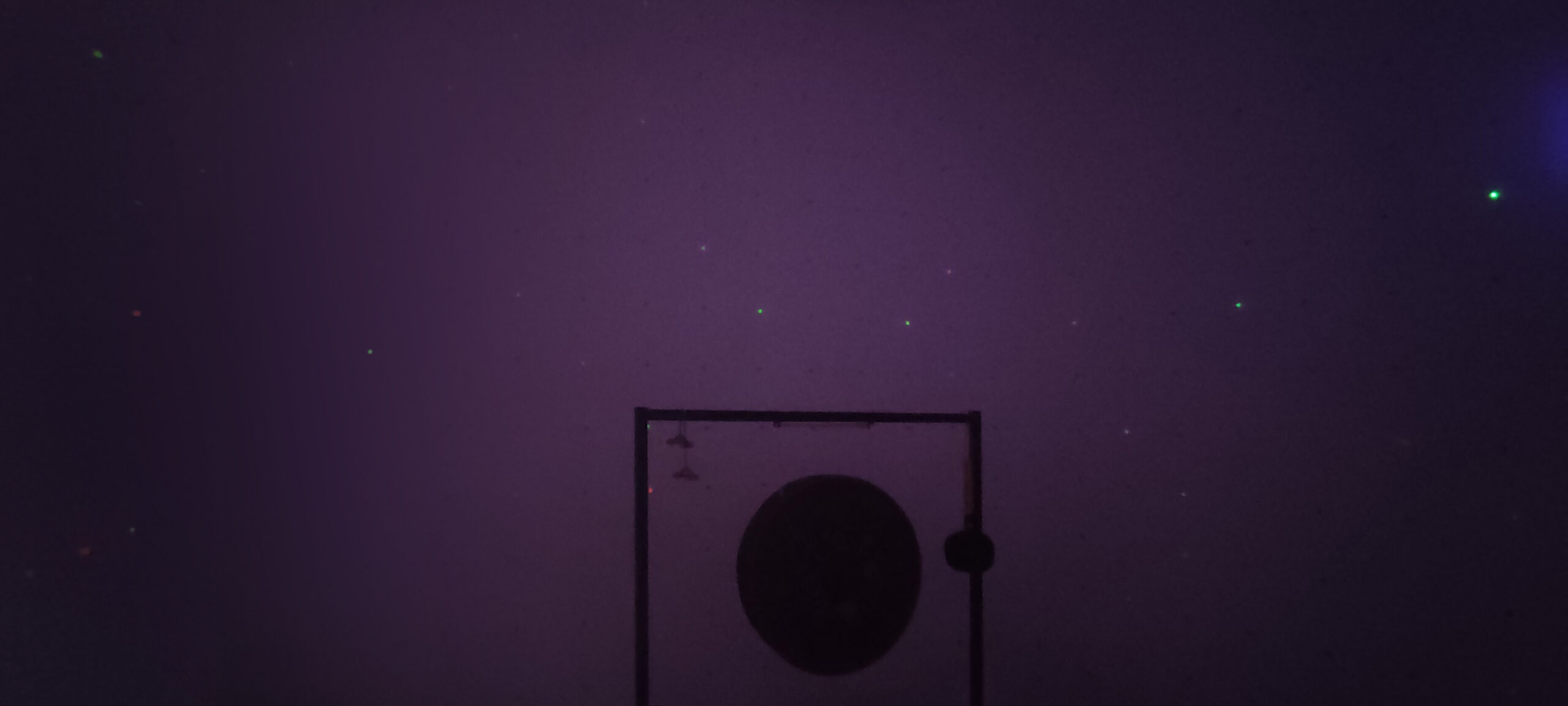
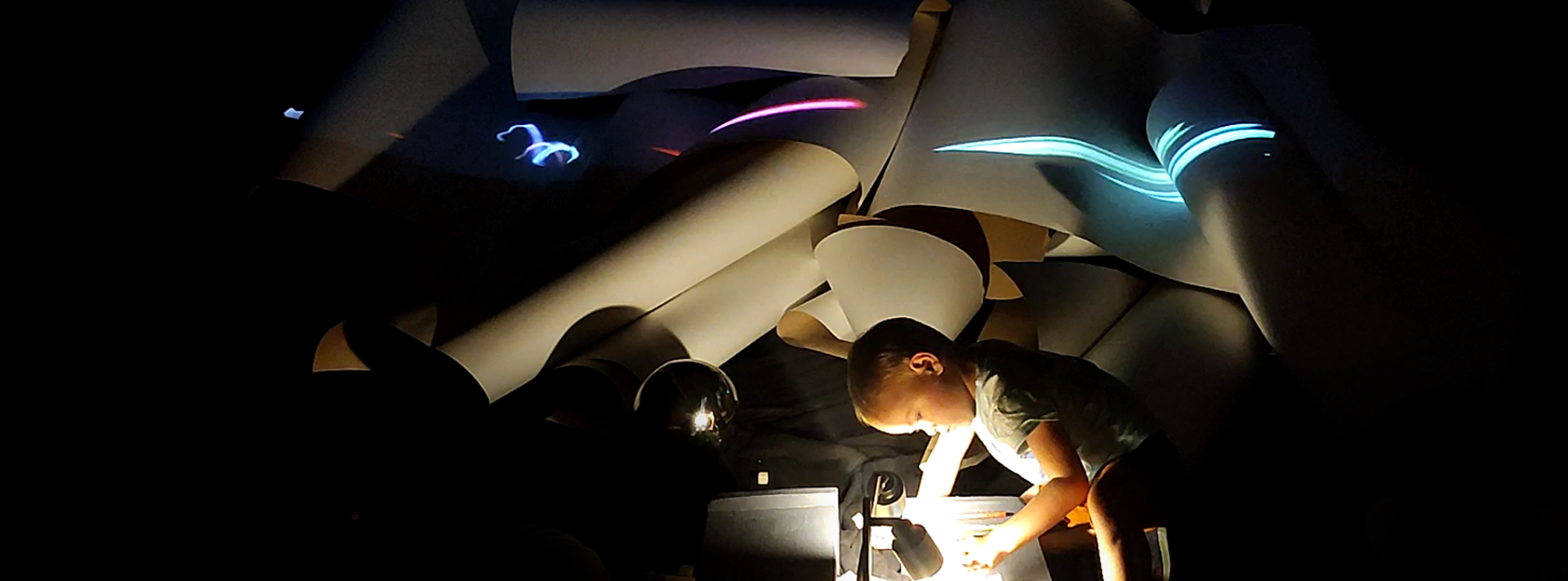
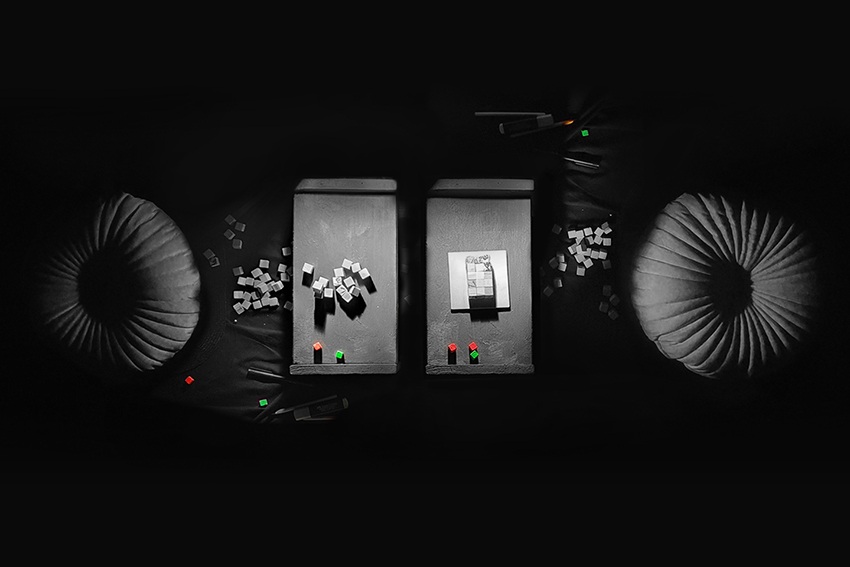
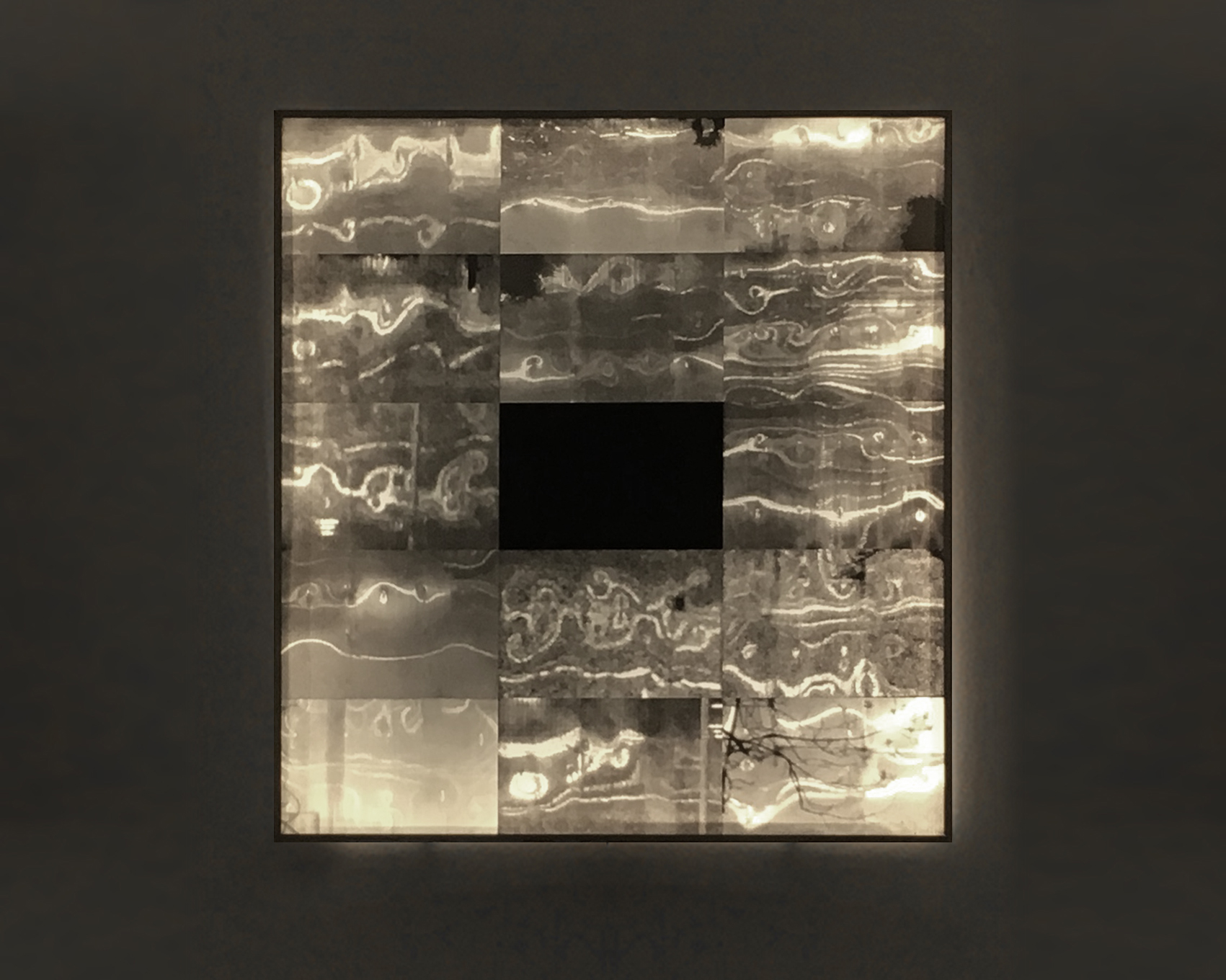
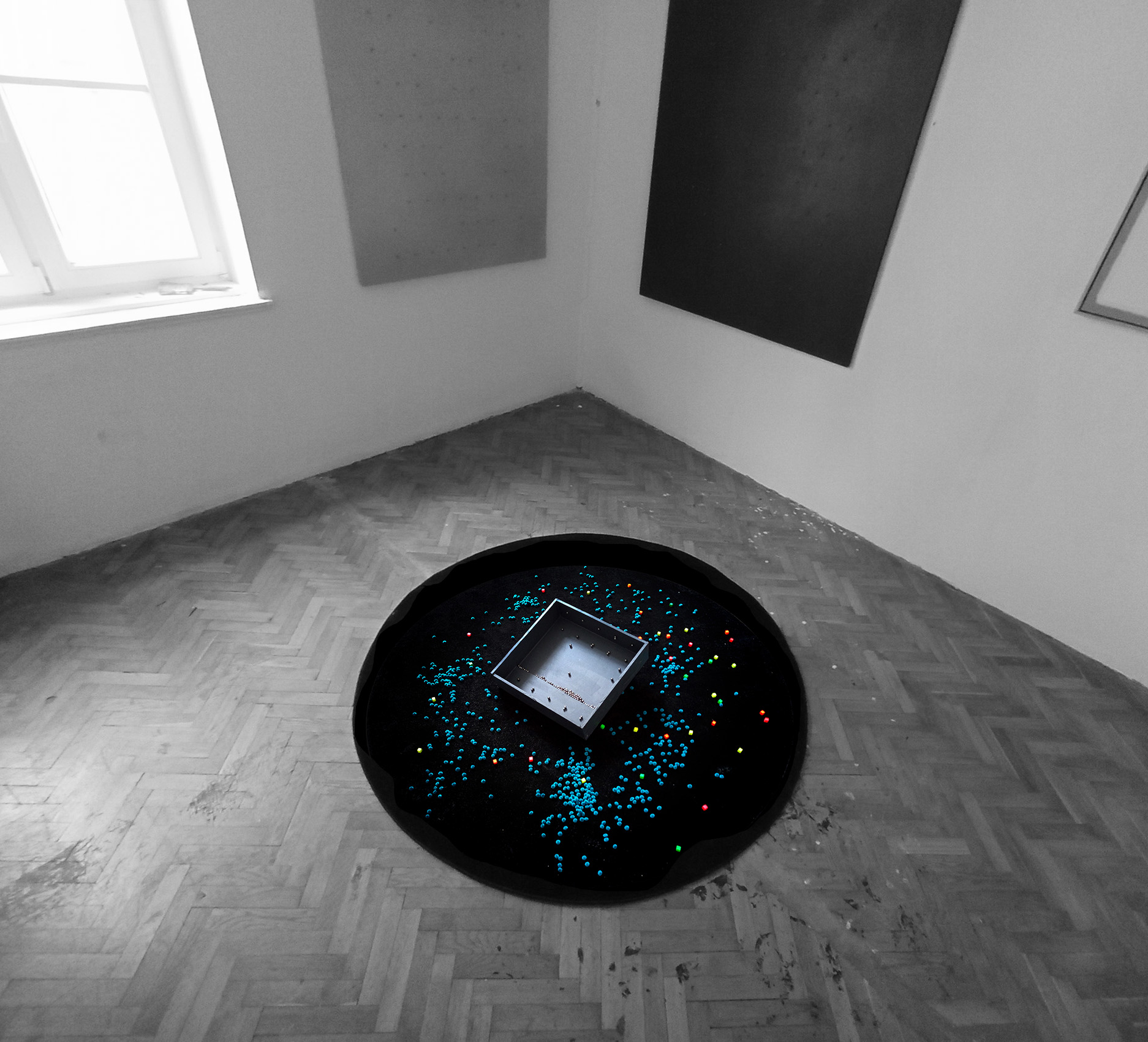
Dziś odbył się wernisaż Pauliny Sylwestrowicz zatytułowany „POLE ODBIORU-NASŁUCHIWANIE”. Kuratorem wystawy był Ryszard Ługowski i to on o godzinie dwudziestej dziesięć rozpoczął ten wieczór koncertem na misach. Po muzycznym wprowadzeniu głos zabrał Robert Żbikowski, dalej Ryszard Ługowski i na koniec do zebranych gości przemówiła autorka wystawionych prac. Co ciekawe opowiadała o sobie, o tym, jak postrzega świat i jak sztuka pomaga w jego zrozumieniu. Był to wernisaż pełny wzruszeń, opowiadań, czuły, a delikatny półmrok sal pomagał wsłuchać się w wypowiadane słowa. Wystawa zaplanowana jest w dwóch salach i te dwie przestrzenie różnią się zasadniczo. W pierwszej głównej sali dominuje układ przestrzennych rulonów, poukładany w formie pryzmy. Po jego bokach ustawione są dwie plansze do gry. Są to kosteczki, które można dowolnie barwić przygotowanymi flamastrami i kredkami. Gra nie ma reguł, uczestnik tworzy je sam. W sali drugiej dominuje instalacja z tych samych kosteczek i kółeczek rytmicznie wklejonych na ścianach pokoju. Elementy są odpowiednio wywoływane światłem lamp. Układ do złudzenia przypomina niebo z gwiazdami, choć każdy znajdzie tu swoją interpretację. Zarówno fale z pierwszej sali jak też i gwiazdozbiory z drugiej stają się krajobrazem wewnętrznym artystki. Falowość ma swój początek w muzyce – to tam pojawia się delikatny, pierwszy podmuch powietrza, wskazujący na barwę dźwięku. W tych instalacjach słychać muzykę. Mnogość zgromadzonych na wystawie form tworzy sieć relacji – to nic innego jak próba opisania rzeczywistości w jej złożonym i nieodgadnionym charakterze. Pojawia się tu także wątek tajemnicy, który staje się dla odbiorcy intrygujący, gdyż odkrywany jest w indywidualny, tylko sobie właściwy sposób. Twórczość Pauliny Sylwestrowicz jest rezonansem duszy, wrażliwym spojrzeniem na to, co wymyka się opisowi. Może dlatego tak trudno ją ująć w słowa – przenika bowiem przez wiele środków wyrazu i dotyka najskrytszych zakamarków naszego istnienia. Wystawa ta przybliża nam spojrzenie na wrażliwość – tę jedyną, własną.
Today, the opening of Paulina Sylwestrowicz’s exhibition titled “FIELD OF RECEPTION – LISTENING” took place. The curator of the exhibition was Ryszard Ługowski, and it was he who, at 8:10 p.m., opened the evening with a concert on singing bowls. After this musical introduction, Robert Żbikowski spoke, followed by Ryszard Ługowski, and finally the artist herself addressed the gathered guests. Interestingly, she spoke about herself, about how she perceives the world and how art helps her understand it.
It was an opening full of emotion and storytelling; the gentle, dimmed lighting of the rooms helped the audience attune to the spoken words.
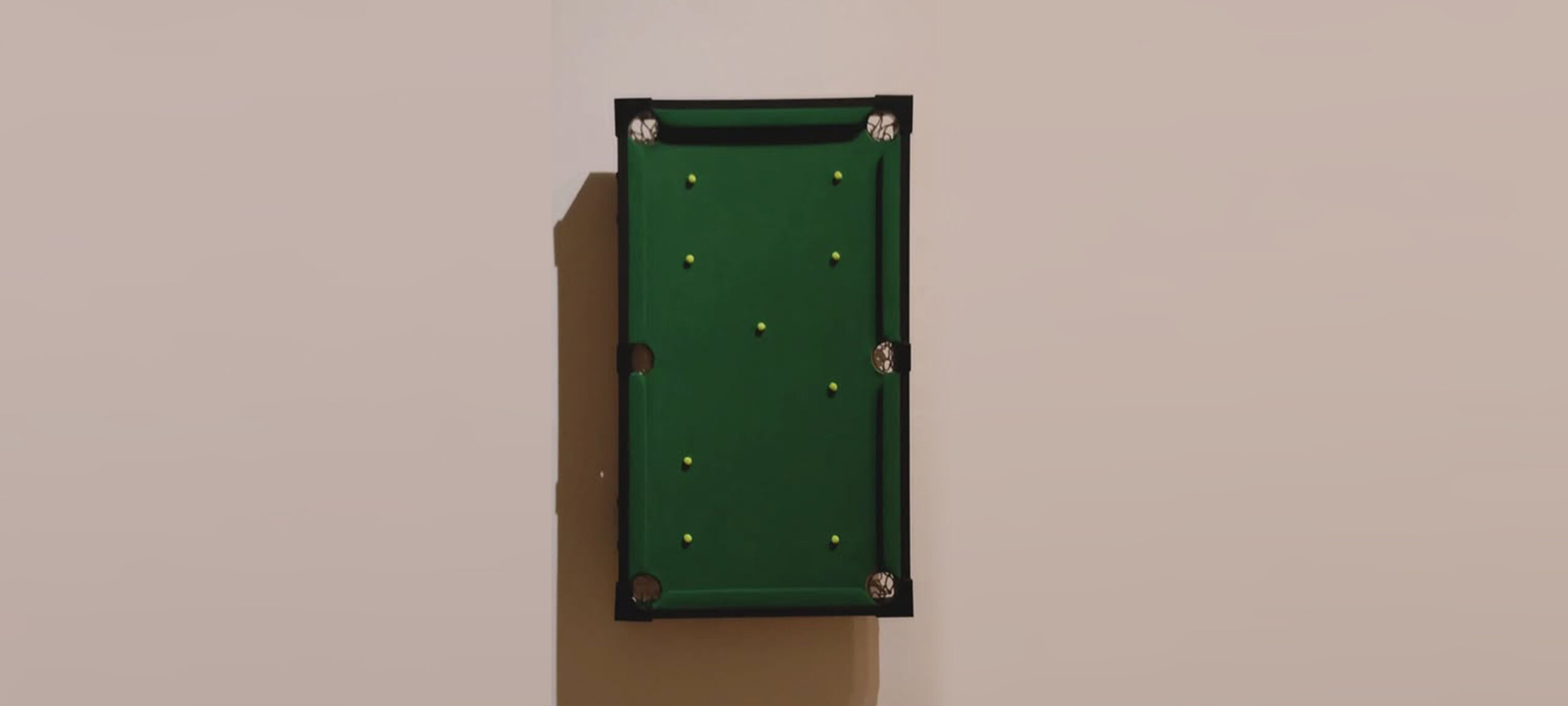
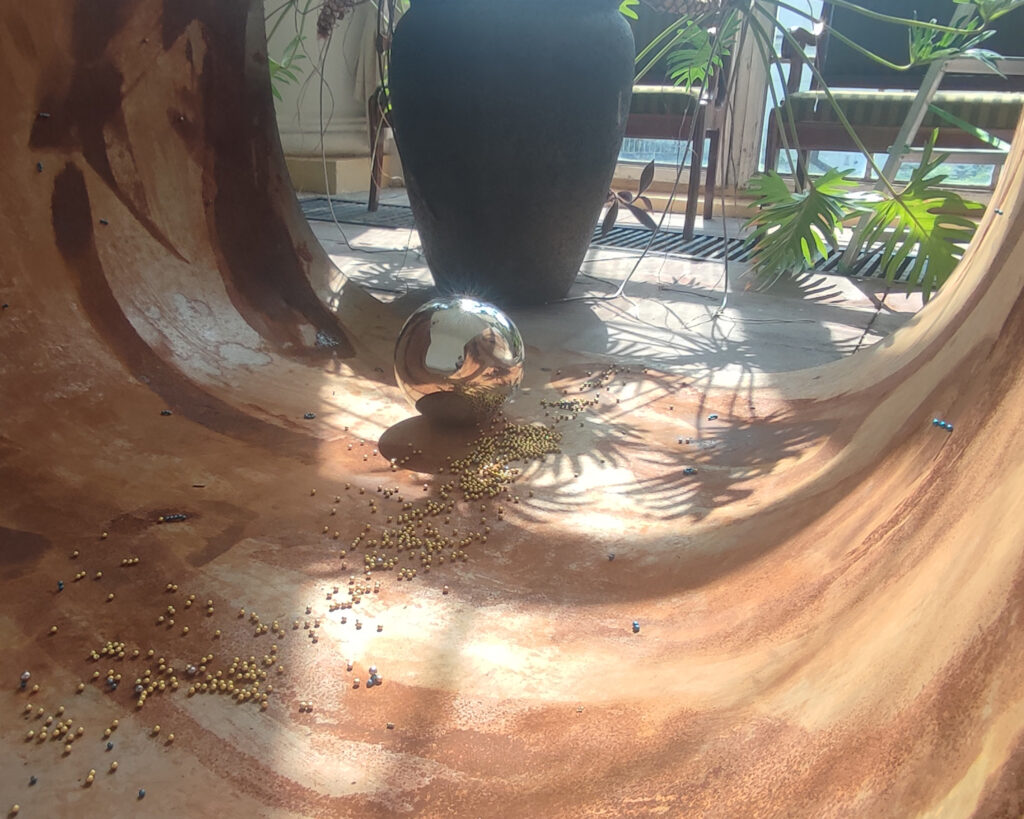
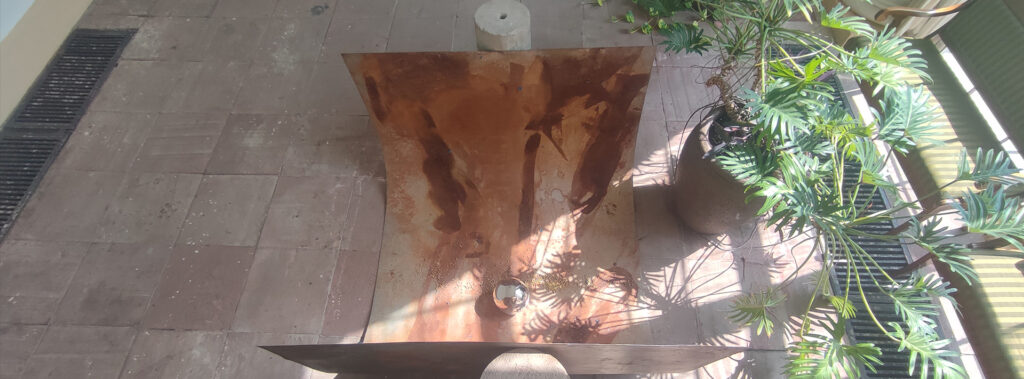
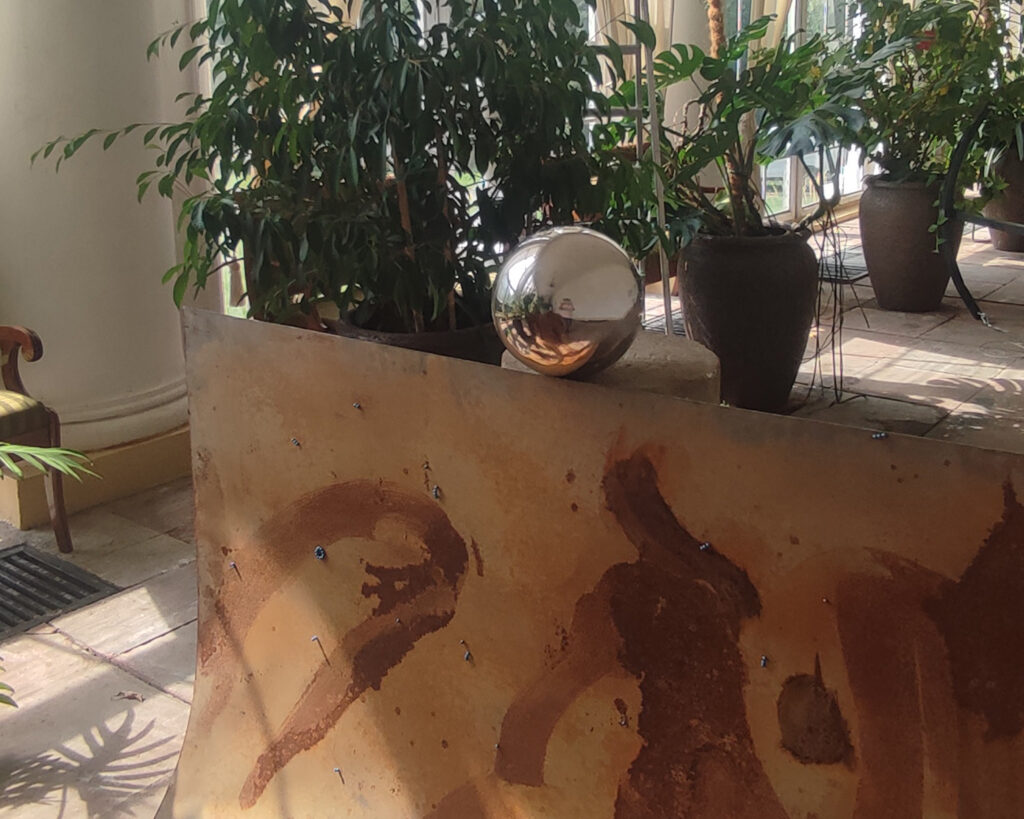
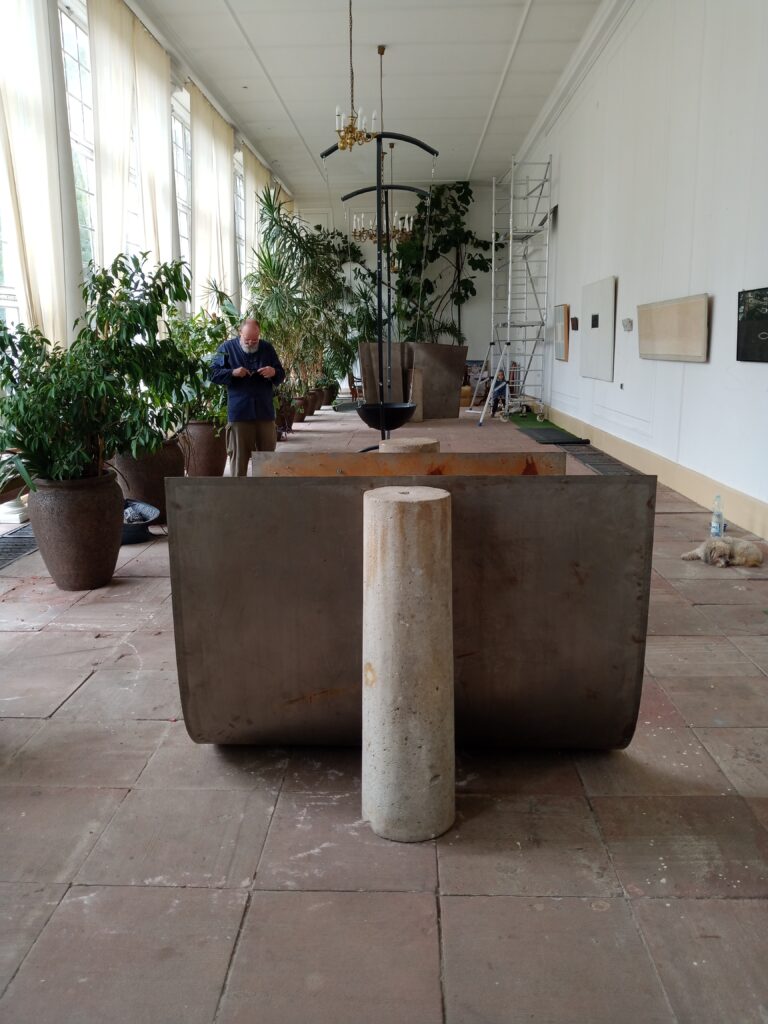
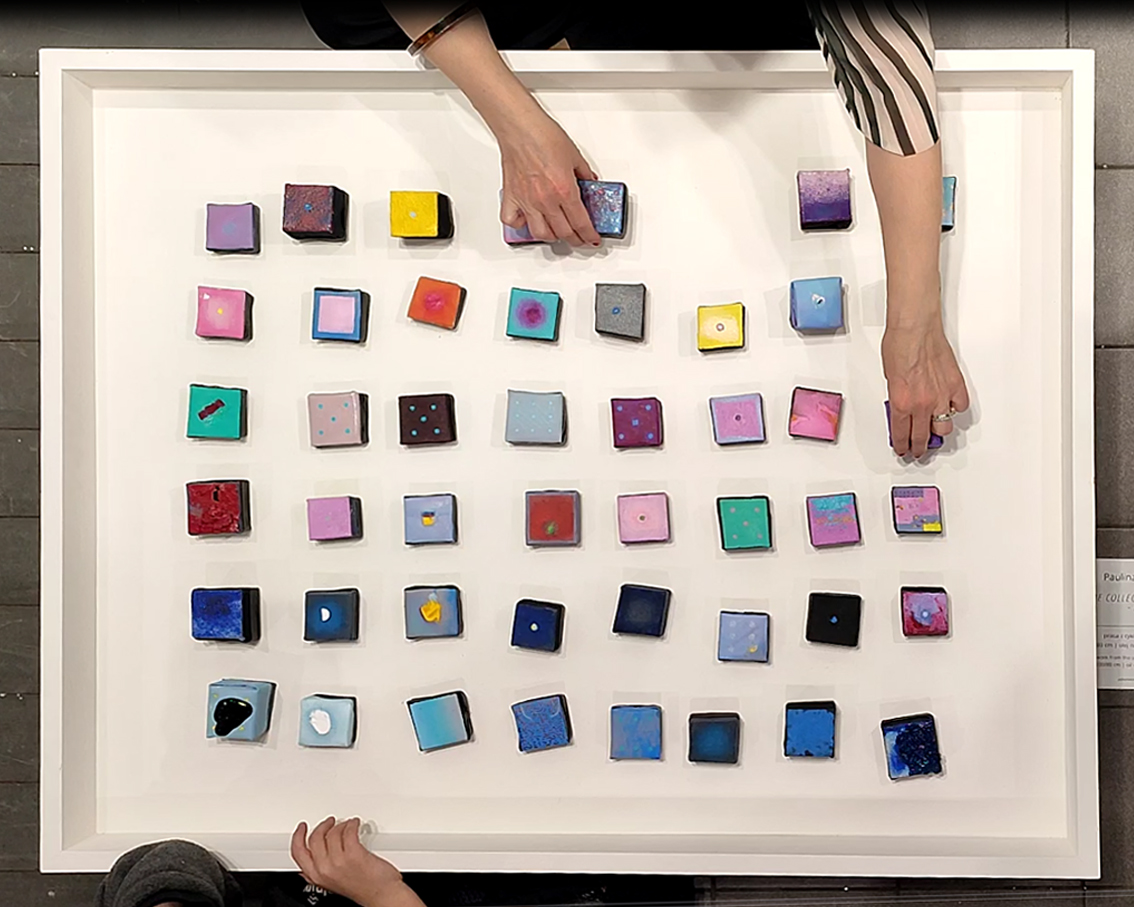
The exhibition is arranged across two rooms, and these two spaces differ significantly. In the first main room, the dominant feature is a layout of spatial rolls arranged in the form of a prism. On both sides, two game boards are set up. These are small cubes that can be freely colored using the prepared markers and pencils. The game has no rules—the participant creates them on their own. In the second room, the main element is an installation made of the same cubes and circles, rhythmically affixed to the walls. The elements are sequentially brought to life by the light of lamps. The arrangement closely resembles a starry sky, though each viewer will find their own interpretation.
Both the waves in the first room and the constellations in the second become part of the artist’s inner landscape. The wave motif has its origin in music—there, the delicate first breath of air appears, signaling the timbre of sound. One can hear music in these installations.
The multitude of forms gathered in the exhibition creates a network of relations—nothing other than an attempt to describe reality in its complex and inscrutable nature. There is also an element of mystery here, which becomes intriguing for the viewer, as it is uncovered in an individual, uniquely personal way. The work of Paulina Sylwestrowicz is a resonance of the soul, a sensitive gaze at what escapes verbal description. Perhaps that is why it is so difficult to capture in words—it permeates many modes of expression and touches the most hidden corners of our existence. This exhibition brings us closer to a view of sensitivity—one that is unique and personal.
PL // „PLACENTA” – sztuka w ruchu, harmonia w chaosie
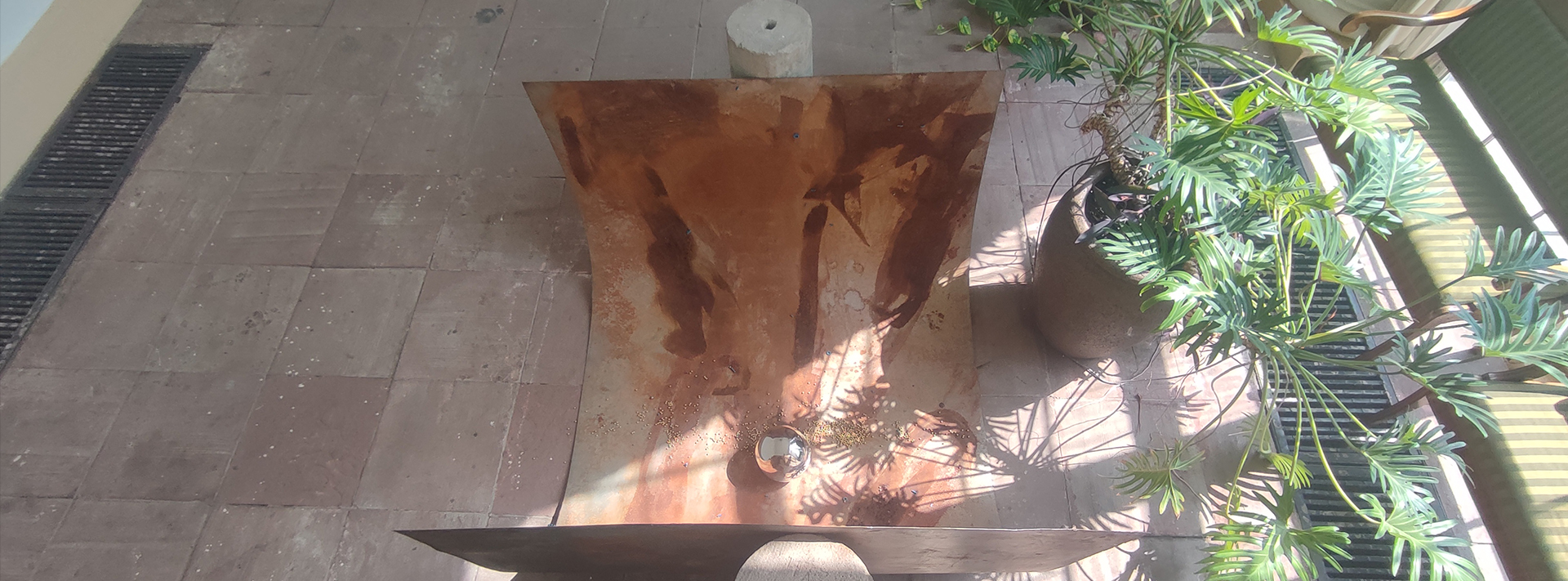
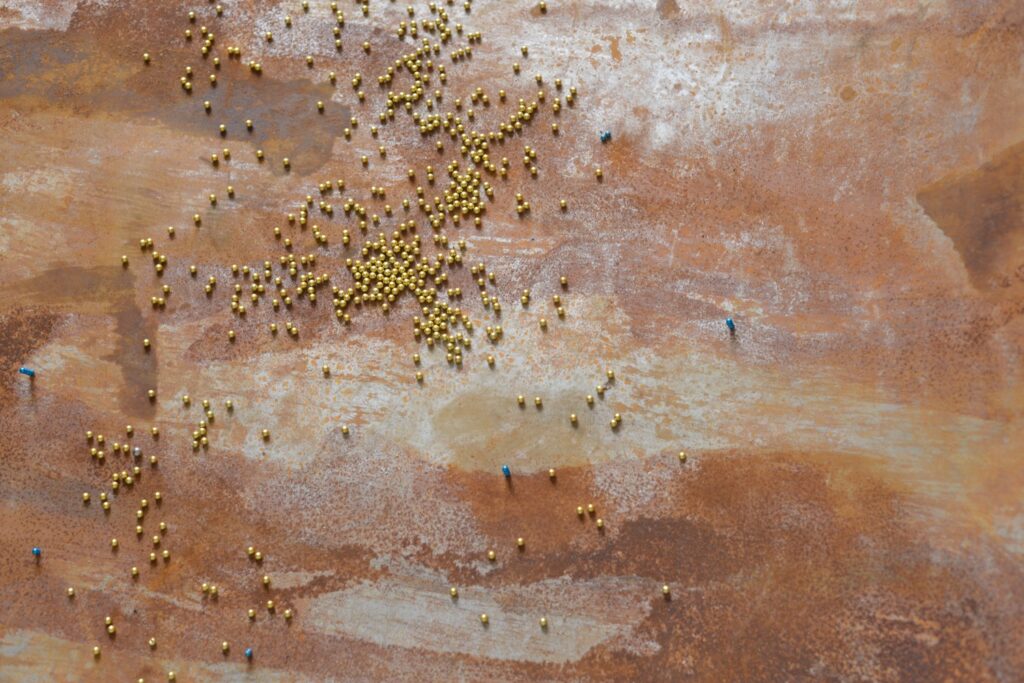
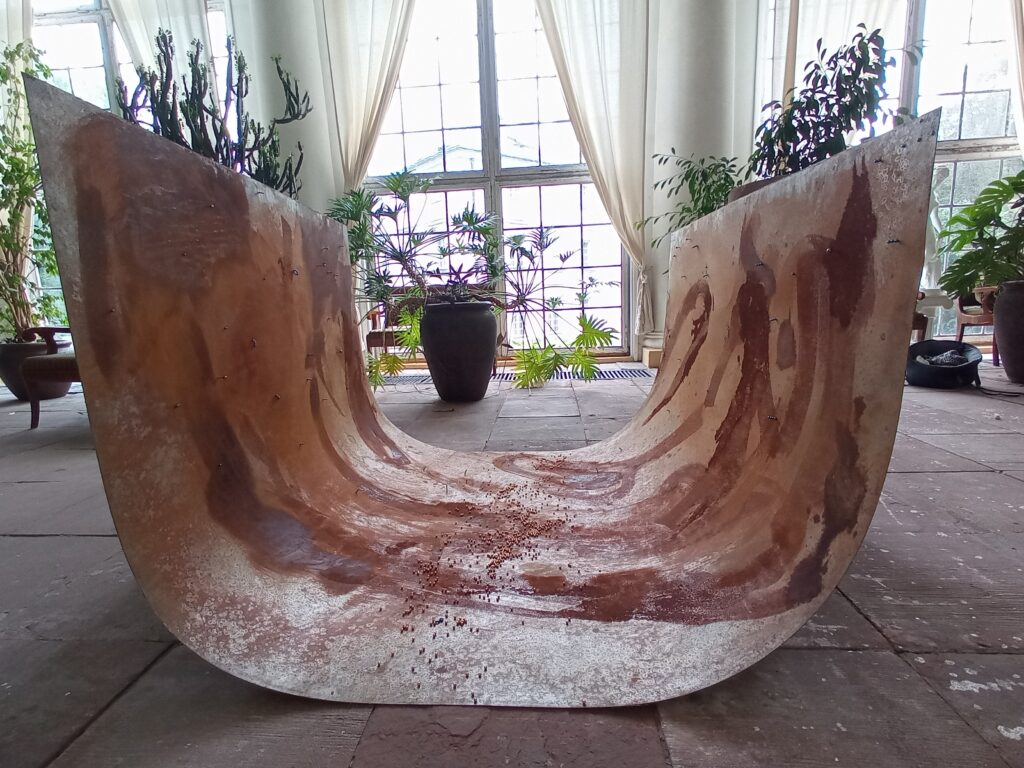
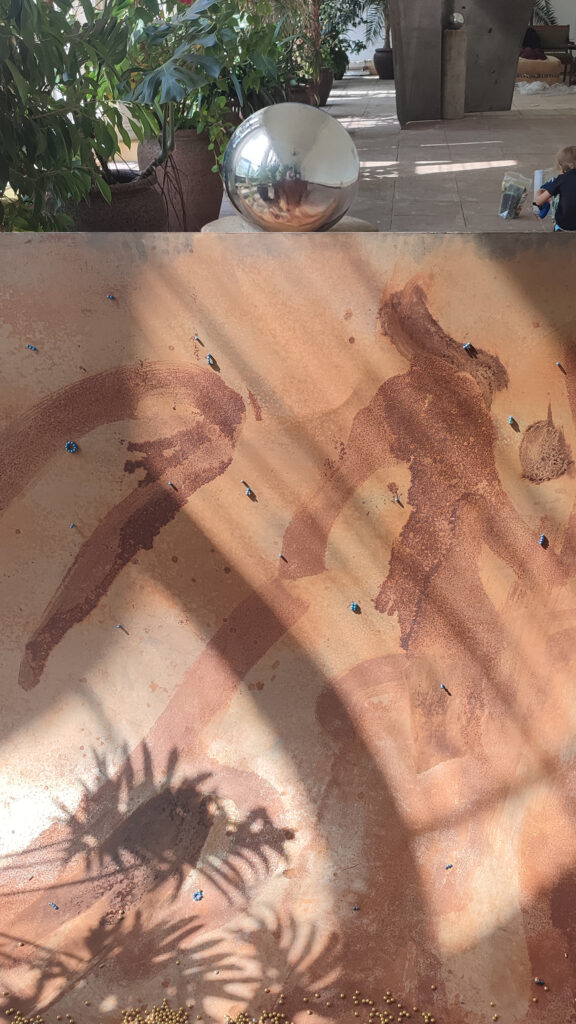
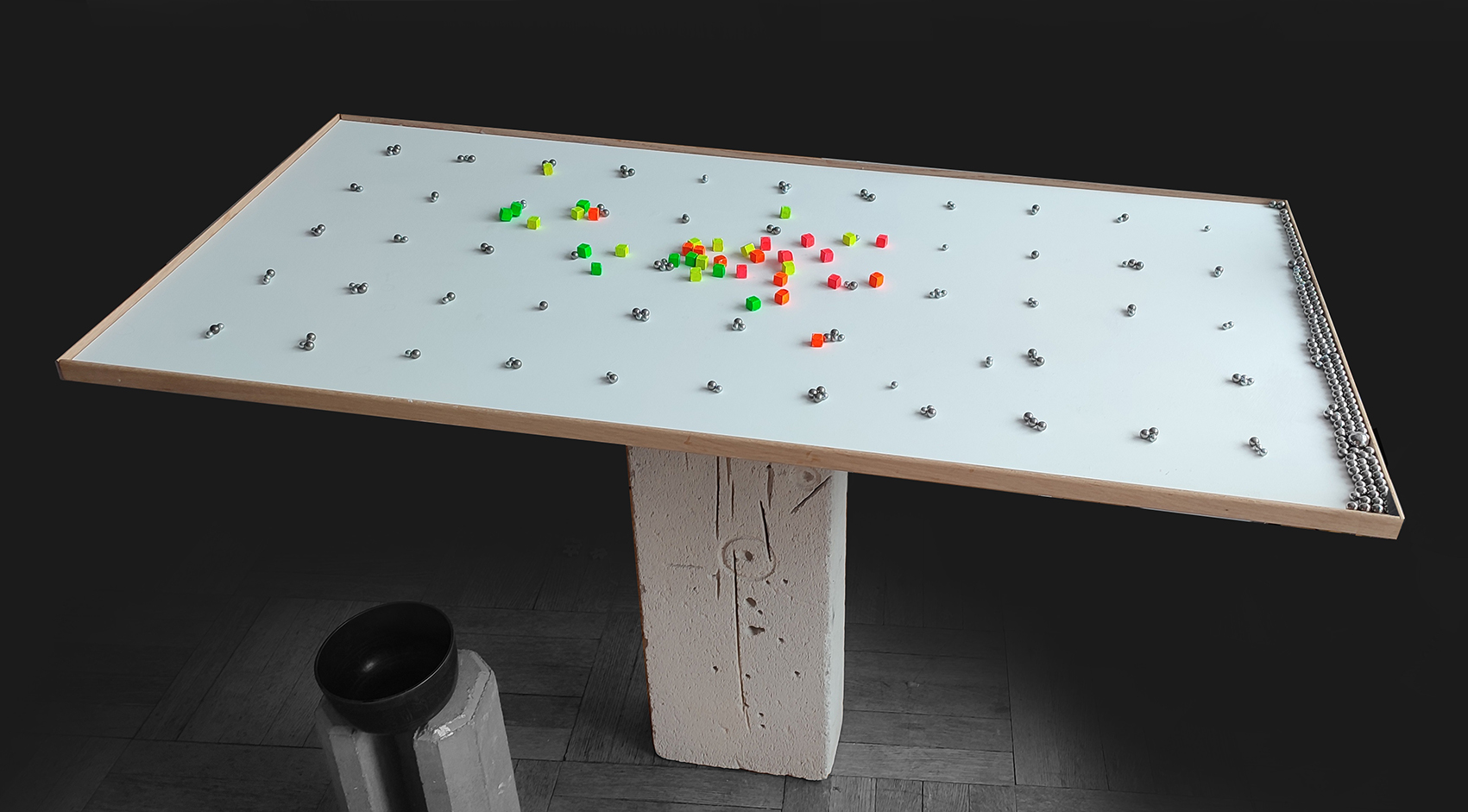
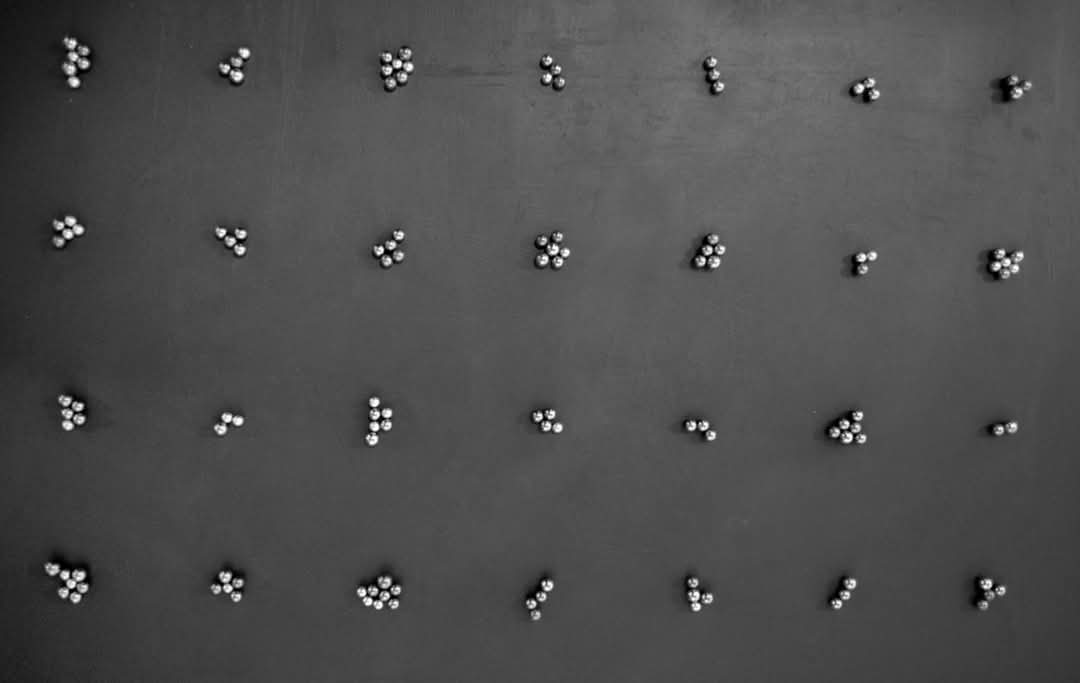
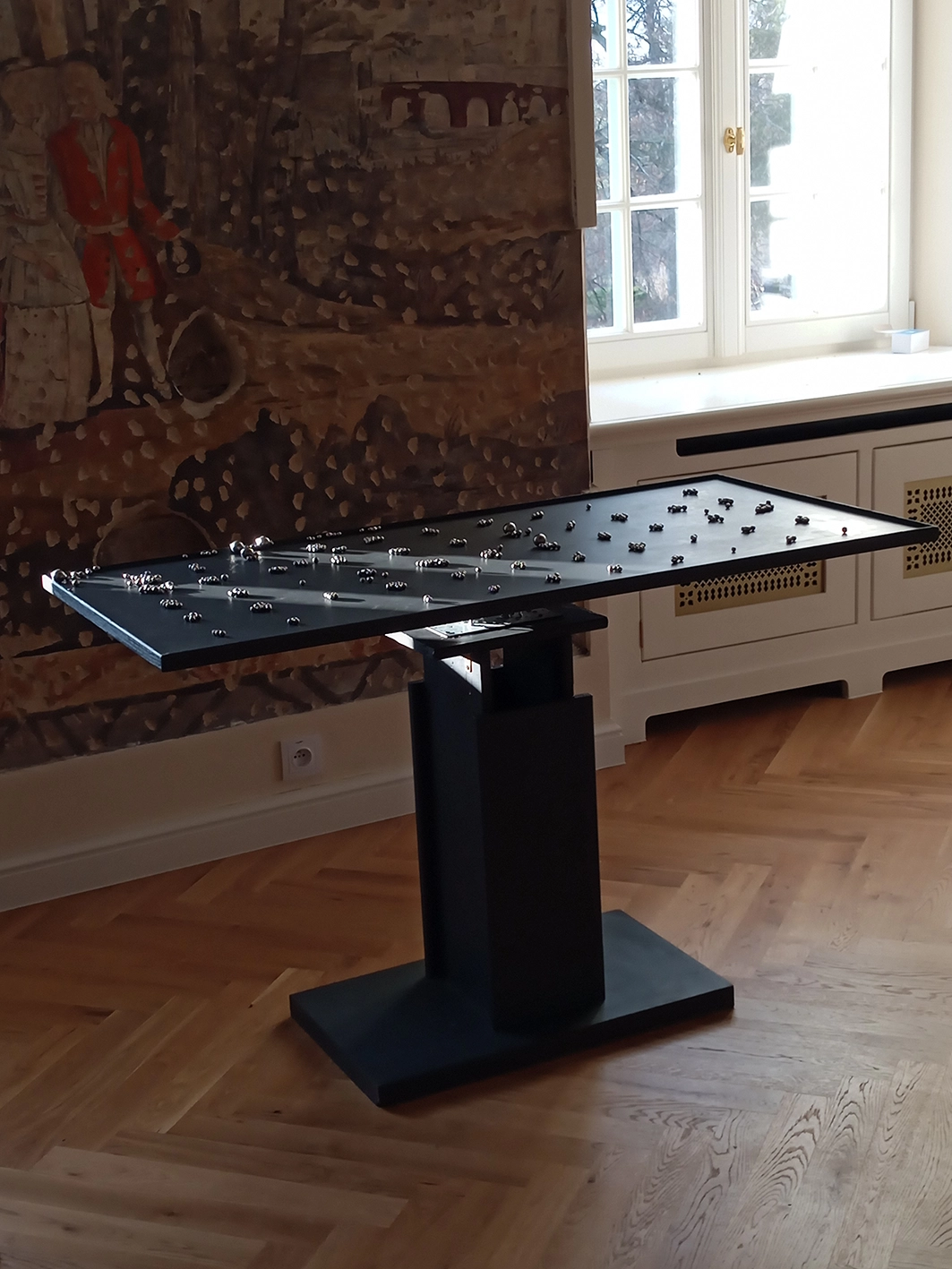
Placenta to interaktywna instalacja, która zaprasza widza do eksplorowania niewymierności sztuki i złożoności, jakie kryją się na styku porządku i chaosu. Na przestrzeni o wymiarach 120×80 cm, wibrująca plansza staje się areną, na której kilkaset metalowych kulek w różnorodnych rozmiarach oraz kolorowe kostki snują swoją nieprzewidywalną opowieść.
To hipnotyczne dzieło oferuje widzowi nie tylko estetyczne doświadczenie, ale także głęboko sensualną immersję. Dźwięk przemieszczających się elementów, ich migotliwe odbicia światła i nieustanny ruch przypominają dziecięce chwile zachwytu nad prostotą formy i zjawisk. Instalacja przyciąga wzrok, wyzwalając intuicyjną chęć dotyku, eksperymentu i gry.
W Placencie każdy znajdzie swój cel: dla jednych będzie to poszukiwanie równowagi w ruchu, dla innych fascynująca medytacja nad chaosem podporządkowanym prawom fizyki. Instalacja staje się miejscem refleksji, w którym każda decyzja widza wprowadza zmienność, a zarazem odkrywa, jak współdziałanie przypadkowości i intencji tworzy chwilowe harmonie w pozornym bezładzie.
Placenta to sztuka, która nie tylko pyta, ale i pozwala doświadczać – balansując między fascynującą prostotą a wielowarstwową refleksją. Wciąga, angażuje i wyzwala poczucie twórczej swobody, której ostateczny kształt zależy od odbiorcy.
Czy znajdziesz swoje miejsce w tej grze porządku i chaosu?
Placenta is an interactive installation that invites viewers to delve into the ineffable nature of art and the intricate interplay between order and chaos. Spanning a dynamic surface of 120×80 cm, this kinetic artwork transforms into a stage where hundreds of metal spheres of varying sizes and colorful blocks weave their unpredictable narrative.
This hypnotic piece offers more than an aesthetic experience—it immerses the senses. The resonant sounds of moving elements, their flickering reflections of light, and the perpetual motion evoke childhood wonder at the simplicity of forms and phenomena. Placenta captures the gaze, ignites curiosity, and stirs a primal urge to interact, experiment, and play.
In this work, each participant finds their unique purpose: for some, it’s a quest for balance amidst the motion; for others, a meditative exploration of chaos governed by the laws of physics. The installation becomes a space for introspection, where every action introduces a subtle shift, revealing how randomness and intention coalesce tov create fleeting harmonies in apparent disorder.
Placenta is not just a question but an experience—teetering between captivating simplicity and profound complexity. It engages, challenges, and unleashes a sense of creative freedom, leaving the final shape of its story in the hands of the audience.
Will you find your place in this dance of order and chaos?
The creative aspect of chaos consists in its rich potentiality, complexity taking form of various perceptive forces discerned in the picture. Rudolf Arnheim points out that people are attracted and feel a compelling need to surround themself with understandable forms (which I call an instinct of form), to such an extent that we make up for the lack of information in order to come up with coherent object that we can observe. This is why it is even more interesting to contemplate an object that is not of figurative nature, where the need to define shows personal, internal attachment. Our imagination creates numerous interpretations, which may result in the need to translate them. Internal reorganisation and multiplicity are transformed through synthesis, which it is possible to define. When we try to make sense of aesthetic sensations, it becomes possible to interpret the lack of form.
KONDENSAT CHAOTYCZNY
Twórczy aspekt chaosu polega na jego bogatej potencjalności, złożoności, pojawiającej się pod postacią różnorakich sił percepcyjnych dostrzeżonych na obrazie. Rudolf Arnheim zauważa, że ludzi pociąga nieodparta potrzeba otaczania się zrozumiałymi formami (ja to nazywam instynktem formy), do tego stopnia, że nadrabiamy braki obserwowanych kształtów aby uzyskać koherentny obiekt obserwacji. Tym bardziej interesującym jest kontemplacja obiektu nieprzedstawiającego, gdzie potrzeba dookreślania ujawnia osobiste, wewnętrzne przywiązania do formy. Wyobraźnia sama tworzy rozliczne interpretacje, stąd być może wypływa potrzeba ich translacji. Wewnętrzna reorganizacja i wielorakość przechodzą w syntezę, którą można nazwać. W momencie, kiedy tłumaczymy sobie wrażenia estetyczne, bezforemność zyskuje interpretację.
Curatorial commentary on the work of Ryszard Ługowski // Wprowadzenie kuratorskie do wystawy Ryszarda Ługowskiego
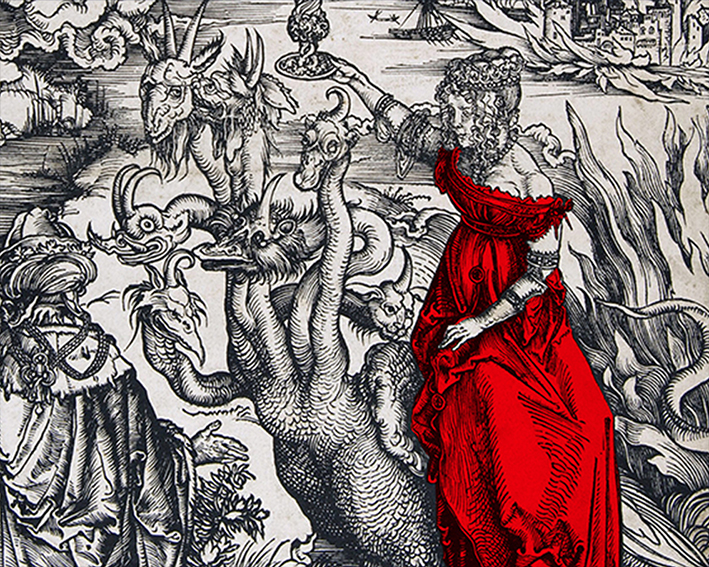
WIELKA NIERZĄDNICA to trzecia wystawa z cyklu “NASZA APOKALIPSA”. Poprzedzające ją “WIATR NAD SKAŁĄ” oraz “DOKĄD ZMIERZACIE SYNOWIE ŚWIATŁOŚCI” stanowią preludium i rozwinięcie tematu wydarzeń rozgrywających się wobec nas w odległym i nie tak znów odległym horyzoncie geograficznym.
Ryszard Ługowski, operując poetyką absurdu, precyzyjnie i czule zakreśla obszar swojej sztuki. W jego pracach często spotkać można żartobliwe odniesienia i nawiązania, odejmujące ciężaru powadze zagadnień, które porusza. Wydaje się, że Artysta łagodnie kieruje naszą uwagę na rzeczy niedefiniowalne i nieuchwytne. A jednak mówi o ‘wiązaniach silnych’, realnie wpływających na świat wokół, posiadających masę, wchodzących w reakcje i dynamicznie kształtujących pole rzeczywistości. To, co boleśnie trwa i rozgrywa się obok nas jest jak rzeka, która toczy swoje wody z nieubłagalną siłą ciążenia.
Ryszard Ługowski zabiera nas w przestrzenie, które wymykają się oczywistości. Tworzy narracje przemawiające spoza czasu – tytułowa Nierządnica wdzięczy się do nas z renesansowego drzeworytu Albrechta Dürera, który zdecydował się na publikację Księgi Apokalipsy świętego Jana pod koniec XV stulecia. Przełom epok przesiąknięty zagrożeniami politycznymi, odkryciami geograficznymi i religijnymi konfliktami jakże przypomina naszą współczesność. Dziś, atomowo-kosmiczna skala niepewności jest równie przytłaczająca, ale i deprymująco podobna. Paradoksalnie, mimo swojej jawności, wydaje się nierozpoznana.
Ługowski w swojej twórczości odsłania te napięcia – spaja w jedno odległe porządki, skleja pozornie niepasujące światy, uzyskując w rezultacie niezwykle klarowne równanie. Jego sztuka działa jak precyzyjna, intuicyjna maszyneria, w której niepostrzegalne siły – podobne do tych, które spajają cząstki elementarne – formują rzeczywistość. Artysta wykracza poza to, co trywialne, znane, zaskakując urzekająco poetyckim warsztatem. Piękno paraboli, która roztacza się w formie wizualnego rebusu, ma moc resetowania utartych sposobów postrzegania świata.
Pole wizualnych oddziaływań, w którym napięcie między tym, co jawne, a tym, co ukryte, otwiera widza na potencjalność tego, co może się wydarzyć, to mimo wszystko zabawa. Ktoś tu ma inwencję i śmiałość dokonywania wyboru, ktoś jest widzem a czyjś pionek zaraz zostanie zbity z planszy. Artysta nie mówi do nas, wprost, lecz przemawia do kogoś wewnątrz nas, do tej części, która obdarzona wolną wolą i otwartym umysłem, gotowa jest na spotkanie z tym, co nieuniknione.
dr Paulina Sylwestrowicz
14.03.2025
Nie znam innego twórcy, który z taką lekkością i pomysłowością potrafiłby wpleść w swój warsztat oczywiste, codzienne obiekty, nadając im wymiar surrealistycznej nieciągłości.
Co mam na myśli? Ługowski operuje niezwykle precyzyjnym językiem wizualnym – bez zbędnych gestów, bez dydaktyzmu, bez narzucania własnych poglądów. A jednak jego sztuka odsłania coś nieuchwytnego – głęboko osadzone w egzystencji mechanizmy, które kształtują naszą rzeczywistość. W jego pracach dostrzegamy struktury rządzące naszym postrzeganiem, arbitralność narracji, którymi opisujemy świat. To właśnie ta bezstronność i nienachalność sprawiają, że widz doświadcza momentu „rozszczelnienia” własnej narracji.
Prowadzi to do fundamentalnego pytania o naturę rzeczywistości i naszą epistemologiczną pułapkę. Fakty są jednoznaczne, ale my – ludzie – jesteśmy skazani na ich interpretację przez filtr kultury, doświadczeń i ideologii. W efekcie żyjemy w wielu, często sprzecznych „rzeczywistościach” – choć fizycznie funkcjonujemy w tej samej. To rozwarstwienie postrzegania jest źródłem napięć i kryzysów. Narracje mogą być zarówno narzędziem emancypacji, jak i zniewolenia. Historia pokazuje, jak łatwo skonstruować opowieść, która usprawiedliwia opresję, a nawet przemoc. Tworzenie narracji stało się formą władzy.