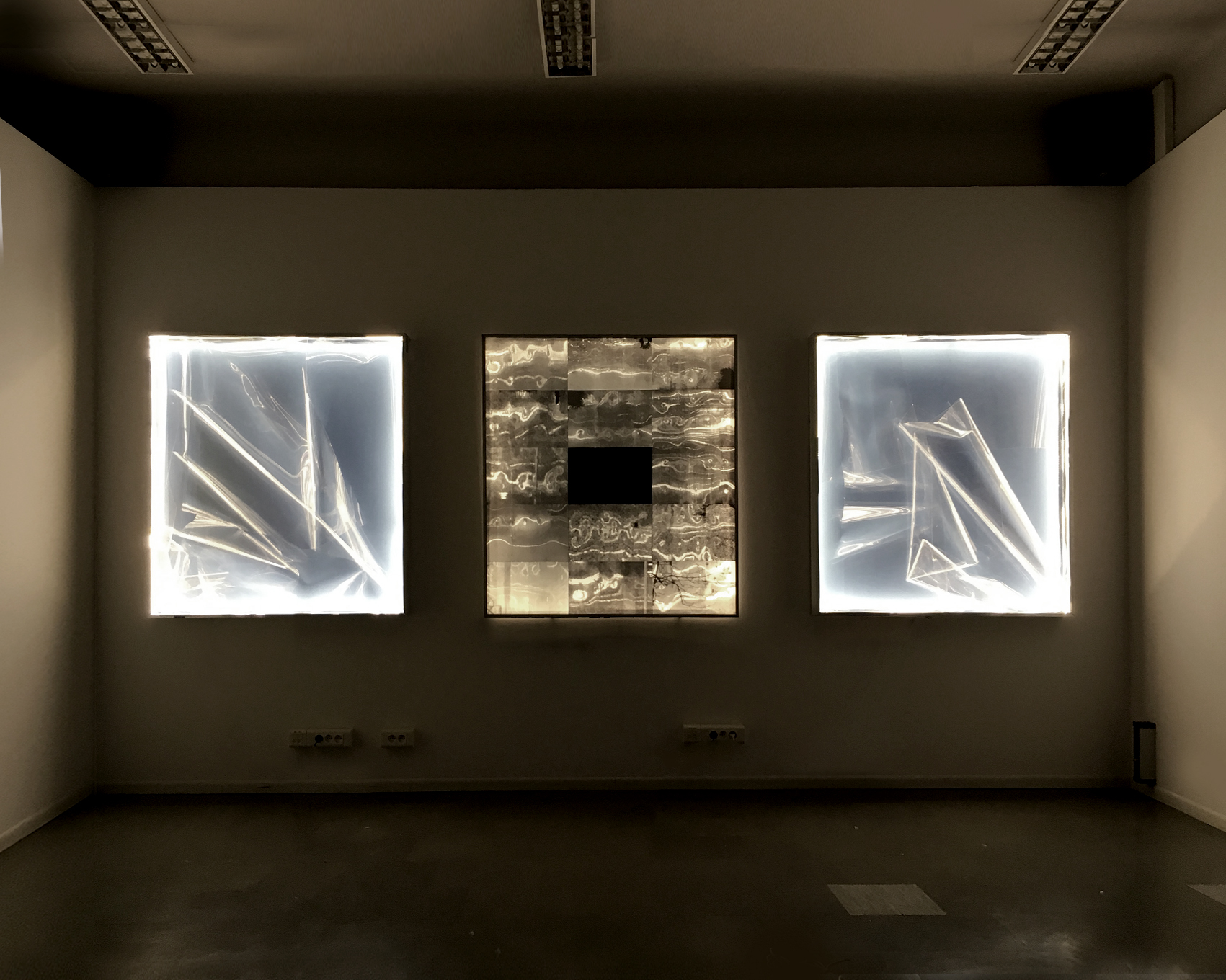
The creative aspect of chaos consists in its rich potentiality, complexity taking form of various perceptive forces discerned in the picture. Rudolf Arnheim points out that people are attracted and feel a compelling need to surround themself with understandable forms (which I call an instinct of form), to such an extent that we make up for the lack of information in order to come up with coherent object that we can observe. This is why it is even more interesting to contemplate an object that is not of figurative nature, where the need to define shows personal, internal attachment. Our imagination creates numerous interpretations, which may result in the need to translate them. Internal reorganisation and multiplicity are transformed through synthesis, which it is possible to define. When we try to make sense of aesthetic sensations, it becomes possible to interpret the lack of form.
KONDENSAT CHAOTYCZNY
Twórczy aspekt chaosu polega na jego bogatej potencjalności, złożoności, pojawiającej się pod postacią różnorakich sił percepcyjnych dostrzeżonych na obrazie. Rudolf Arnheim zauważa, że ludzi pociąga nieodparta potrzeba otaczania się zrozumiałymi formami (ja to nazywam instynktem formy), do tego stopnia, że nadrabiamy braki obserwowanych kształtów aby uzyskać koherentny obiekt obserwacji. Tym bardziej interesującym jest kontemplacja obiektu
nieprzedstawiającego, gdzie potrzeba dookreślania ujawnia osobiste, wewnętrzne przywiązania do formy. Wyobraźnia sama tworzy rozliczne interpretacje, stąd być może wypływa potrzeba ich translacji. Wewnętrzna reorganizacja i wielorakość przechodzą w syntezę, którą można nazwać. W momencie, kiedy tłumaczymy sobie wrażenia estetyczne, bezforemność zyskuje interpretację.